
Leica Q3 Monochrom Digital Camera

Leica Q3 Monochrom Digital Camera
Leica Q3 Monochrom Digital Camera Summary
The Leica Q3 Monochrom Digital Camera is a full-frame compact camera with a dedicated black and white sensor, which offers a different way of working for photographers who want to focus on light, texture and tone.
Leica has produced monochrome sensors for some generations now, and the Q3 Monochrom continues the ethos in a more modern form. It is based on, and complements the regular Q3, sharing the same core technology, but with a sensor that only records luminance values.
There is no colour filter array in the Leica Q3 Monochrom, no colour processing and no demosaicing, which gives the resulting images a distinct look that is recognisably ‘Leica’, but entirely in black and white.
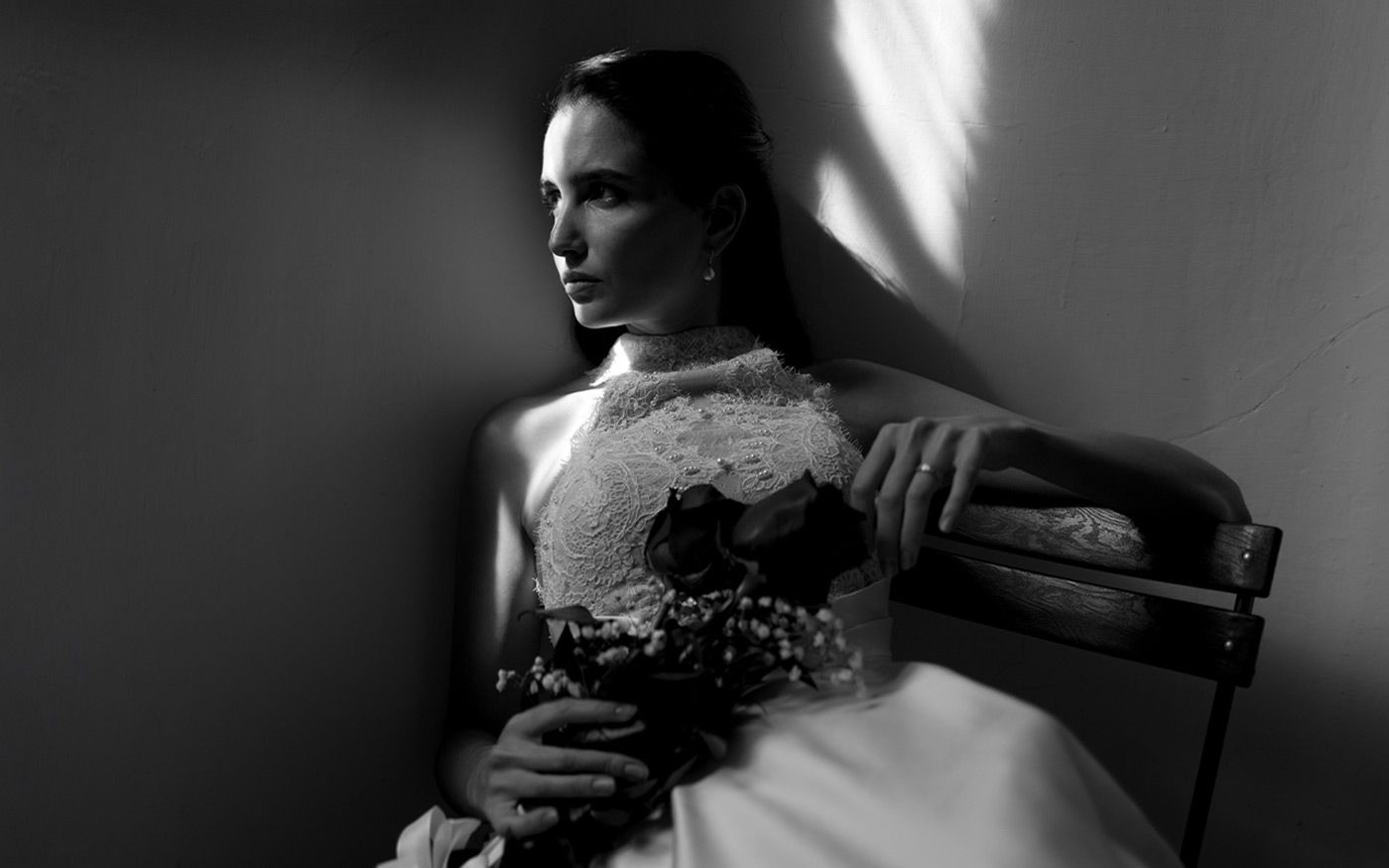
The 60 megapixel monochrome sensor with Triple Resolution Technology produces 60, 36 or 18 megapixel files with a wide dynamic range and particularly clean high ISO performance. The sensor is capable of recording exquisite detail from deep shadows through bright highlights, which is something photographers enjoy about Monochrom cameras.
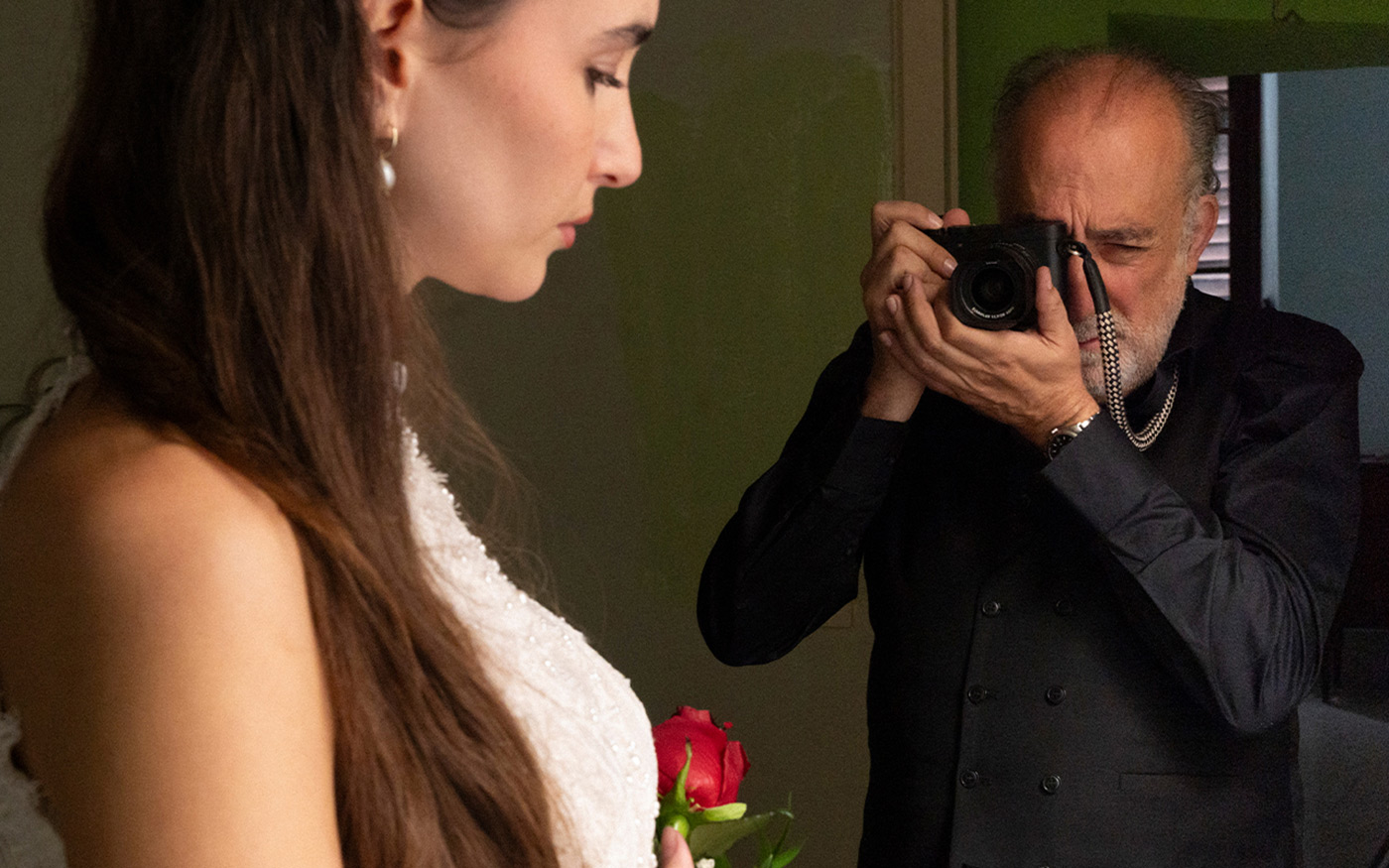
The sensitivity range reaches an impressive ISO 200,000 and the files retain a familiar Leica tonal character, which is notably different from simply converting colour images to black and white after the fact.
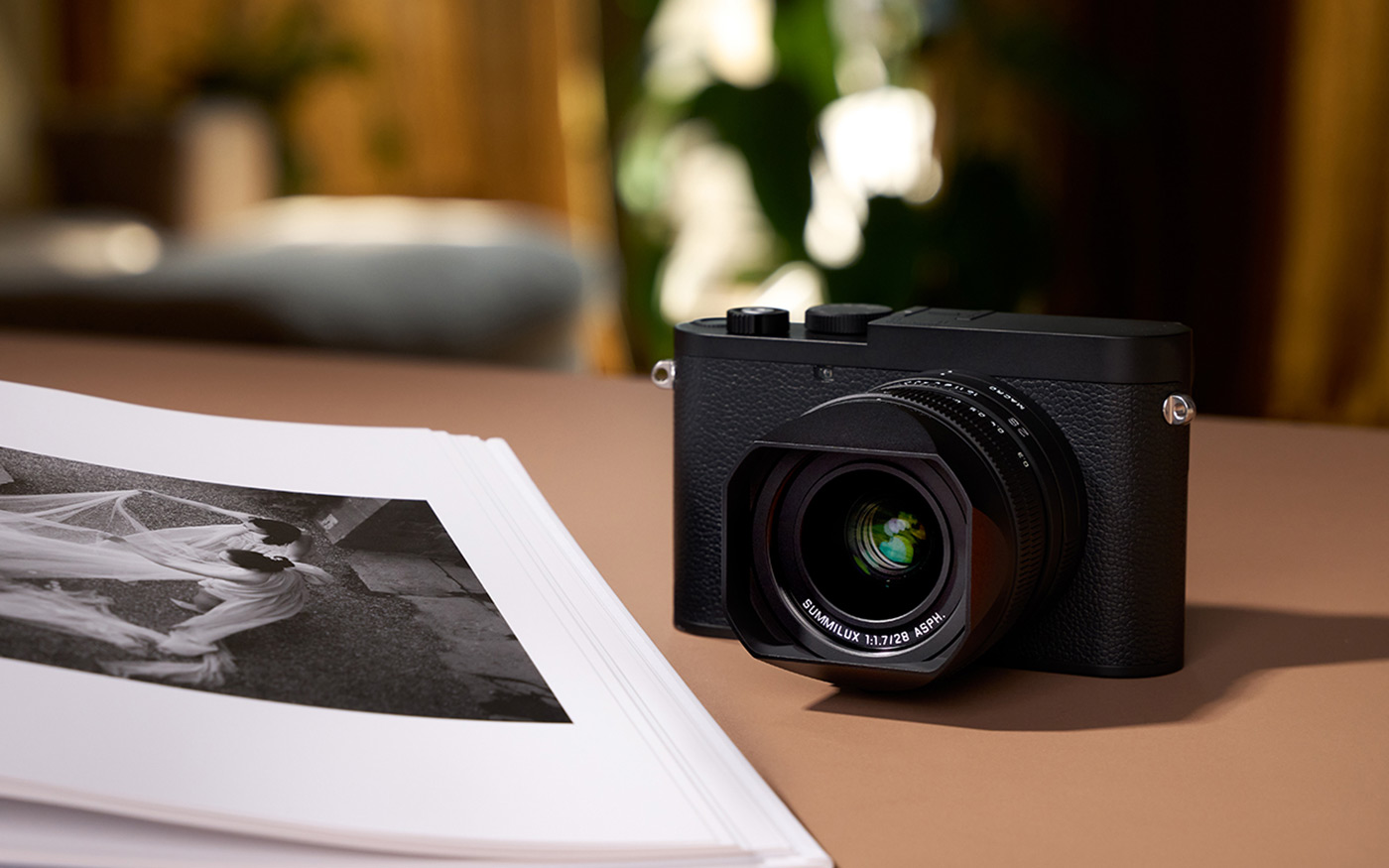
The Q3 Monochrom has the same fixed Summilux 28mm f/1.7 ASPH. lens as the Q3, which includes optical image stabilisation and an integrated macro mode from just 17 cm. It also inherits the Q3’s fast Maestro IV processor, tilting rear display, OLED viewfinder and IP52 weather resistance. However on the outside things are different with a fully monochrome exterior with blacked-out engravings and no red Leica badge, giving it a discreet and quite unique look.
What you end up with is a Leica compact camera exclusively for black and white photography that handles in a very modern way, yet produces images with a classic feel.
The user interface has been adapted from the intuitive SL-System and is easy to navigate, with separate colour schemes for photo and video modes and clear menu navigation.
Leica Q3 Monochrom Key Features
- 60 megapixel full-frame monochrome sensor
- Triple Resolution Technology with 60, 36 or 18 megapixel output
- Summilux 28mm f/1.7 ASPH. lens with optical image stabilisation
- Integrated macro mode with 17 cm close focus
- ISO range from 100 to 200000
- 5.76 megapixel OLED viewfinder and a tilting touchscreen
- Contrast based autofocus with Eye and Face Detection
- IP52 protection against dust and water splashes
- 8K video recording in MP4 and MOV formats
- USB-C connectivity for tethering and audio
- Wi-Fi and Bluetooth with Leica FOTOS integration
- Content Credentials for authenticated image files
- Compatible with regular Q3 accessories
Discover more
Is Black and White Photography for you? Learn more in our first impressions. Read the Q3 Monochrom Review
Leica Q3 Monochrom Digital Camera in More Detail
How is the Q3 Monochrom different from the regular Q3?
The primary difference is the sensor. The Q3 Monochrom uses a dedicated monochrome sensor without a colour filter array, so every pixel records only luminance. This negates the need for demosaicing and allows more light to reach the sensor, which improves sharpness, tonal range and ISO performance.
The ISO range goes up to 200,000 and the files preserve subtle highlight and shadow transitions that are very hard to match if simply converting colour images afterwards.
Why is a monochrome sensor different from converting colour to B&W?
A monochrome sensor changes the way a scene is rendered. Because each pixel receives the full amount of light, fine detail is clearer and textures look more natural. Dynamic range is slightly broader too, which allows for shadow recovery while rendering very bright skies and backlit subjects.
Low light performance is better than a comparable colour sensor, which is why earlier Monochrom cameras became popular for night photography and documentary in particular.
This camera also includes Leica’s renowned Triple Resolution Technology, which lets you choose between 60, 36 or 18 megapixel output depending on the file size or workflow you want at the time.
What is the Q3 monochrom autofocus system?
The Q3 Monochrom uses contrast detection autofocus because dedicated phase detection pixels rely on colour information. In practice contrast AF suits monochrome photography well, as it focuses by looking for the point of highest edge detail and contrast.
The camera does include Eye and Face Detection along with animal detection (in beta) along with multiple AF area modes. Tracking is not available however, as this requires colour data currently, but general AF performance is accurate and predictable for everyday shooting.
What lens does the Q3 Monochrom have?
The Summilux 28mm f/1.7 ASPH. lens is the same optical design used across the Q3 series. It boasts optical stabilisation, a fast f/1.7 aperture and an 11-element design with three aspherical elements.
The lens also has a dedicated macro setting offering a close focus distance of 17 cm.
Digital frame selection is available with equivalent fields of view of 35, 50, 75 and 90 mm, which is helpful when composing closer scenes.
The combination of this lens and the monochrome sensor is capable of producing detailed files with really detailed micro contrast and wide tonal range. Prepare to be impressed.

Does the Q3 Monochrom capture video?
Although it is primarily a stills camera, the Q3 Monochrom does record video up to 8K, with options for MP4, MOV and ProRes capture depending on your workflow. A USB-C port supports external microphones and tethered shooting.
The lack of colour data renders footage with a distinctive monochrome look straight out of camera, which may suit certain projects, without any need for colour grading.
Connectivity
- Wi-Fi and Bluetooth connection to the Leica FOTOS app for quick image transfers
- USB-C with 10 Gbps speeds
- USB-C tethered shooting support
- USB-C audio input for compatible microphones
- Content Credentials for verifiable image origin and transparency
Is the Q3 Monochrom body design different from the regular Q3?
The Q3 Monochrom has a fully monochrome exterior that sets it apart from the standard Q3. The body has a matte black finish with engraved markings in black and grey, and the familiar red Leica logo is deleted to maintain a discreet appearance.
The lens hood follows the same blacked-out theme, and the leatherette covering matches the stealthy aesthetic for a truly unique finish. This gives the camera a look which many photographers prefer for street photography and documentary where a low profile is valuable.
The design also reflects a consistent approach that Leica has taken with its Monochrom cameras, and even has its own complementary Wireless Charging Handgrip HG-DC 1 Monochrom.
How does a monochrome sensor compare to converting colour images to black and white?
A dedicated monochrome sensor produces cleaner and more detailed files than converting a colour image to B&W afterwards. This is because the sensor records luminance directly, with no colour channels.
Conversions to monochrome rely on data that has already been separated into red, green and blue, so fine detail and tonal separation are never quite the same.
A monochrome file usually shows:
- Stronger micro contrast
- More consistency in deep shadows
- Fewer artefacts in high ISO settings
Do in-camera monochrome images provide a specific look?
Yes, the look comes from how the sensor records light. There is no colour filtering and no demosaicing, which means tonal transitions appear more natural. Shadows fall off differently, highlights hold for longer and textures keep structure.
This creates a rendering that feels closer to film, although still clearly digital. Many photographers describe the output as having a straightforward, honest quality because you see luminance without any colour influence, and are drawn to those results.
When are colour lens filters useful for monochrome camera?
Colour filters are useful when you want to change contrast and the overall look in camera. Filters influence how specific wavelengths reach the sensor, which changes how tones separate in the final image.
The effects are predictable and easy to apply once you get used to using them.
A few common examples are:
- Red filters deepen blue skies and add drama
- Orange filters add a bit of separation between clouds and sky
- Yellow filters give a lift to contrast without pushing
- Green filters help with foliage, especially when you want clean leaves and trees
Filters can be useful when shooting portraits, subtly adjusting the way skin tones sit within the frame. We recommend taking a host with and without a filter to see the effects first hand.
Who is the Leica Q3 Monochrom for?
- Photographers who appreciate black and white image making
- Anyone who prefers working with tone, light and texture rather than colours
- Street photographers will be drawn to the handling and discreet full-frame form factor
- Documentary and reportage where users appreciate high ISO performance and the wide dynamic range. The crop able 60MP files are also of value here
- Users of previous Leica cameras who want a familiar workflow with noticeably cleaner files
- Photographers who like a fixed 28 mm lens and want something small enough for daily use
- Collectors and long-term Leica enthusiasts who follow the entire line
- People who want a durable, desirable camera with a user-friendly interface and solid build
What’s in the box
- Leica Q3 Monochrom camera
- Leica BP-SCL6 rechargeable battery
- Carrying strap
- Lens hood
- Lens cap
- Accessory shoe cover
- USB-C cable
- Printed instructions
Leica Q3 Monochrom Specifications
|
Camera Type |
Full frame compact digital camera |
|
Sensor Type |
Monochrome CMOS sensor without colour filter array |
|
Effective Resolution |
60.3 megapixels |
|
Total Resolution |
62.39 megapixels |
|
Triple Resolution Output |
60 MP, 36 MP, 18 MP |
|
Low Pass Filter |
None |
|
Processor |
Leica Maestro IV |
|
File Formats (Photo) |
DNG, DNG+JPG, JPG (DCF 2.0, Exif 3.0) |
|
File Formats (Video) |
MP4 (H.264/H.265), MOV (H.264/H.265), ProRes |
|
Video Maximum Resolution |
8K (7680 x 4320) |
|
Video Additional Modes |
C8K, C4K, 4K, Full HD |
|
Lens |
Leica Summilux 28mm f/1.7 ASPH., 11 elements in 9 groups, 3 aspherical elements |
|
Image Stabilisation |
Optical image stabilisation |
|
Aperture Range |
f/1.7 to f/16 in 1/3 EV steps |
|
Filter Thread |
E49 |
|
Macro Mode |
17 cm minimum focus |
|
Digital Frame Selection |
35 mm, 50 mm, 75 mm, 90 mm equivalent |
|
Autofocus System |
Contrast detection AF |
|
AF Modes |
Intelligent AF, AFs, AFc, Touch AF |
|
AF Detection |
Eye, Face, Body Detection, Animal Detection (Beta) |
|
AF Fields |
315 |
|
Focus Range |
30 cm to infinity |
|
Exposure Modes |
Program (P), Aperture Priority (A), Shutter Priority (S), Manual (M), Scene Modes |
|
Exposure Metering |
Spot, Centre-weighted, Highlight-weighted, Multi-field |
|
ISO Range (Photo) |
ISO 100 to 200000 |
|
ISO Range (Video) |
ISO 100 to 200000 |
|
Dual Base ISO (Photo) |
ISO 100–560 (Low), ISO 640–200000 (High) |
|
Shutter Type |
Mechanical or electronic |
|
Mechanical Shutter Speeds |
60 minutes to 1/2000 s |
|
Electronic Shutter Speeds |
60 s to 1/16000 s |
|
Flash Sync |
Up to 1/2000 s |
|
Continuous Shooting |
2, 4, 5, 7, 9, 15 fps (depending on shutter and bit depth) |
|
Viewfinder |
5.76 MP OLED EVF |
|
Rear Display |
Tilting 3 inch touchscreen |
|
Storage Media |
SD / SDHC / SDXC, UHS-II recommended |
|
Connectivity |
USB-C 3.1 Gen 2, HDMI Type D, Wi-Fi, Bluetooth 5.0 |
|
FOTOS App Support |
Yes, via Wi-Fi and Bluetooth |
|
GPS |
Via Leica FOTOS app |
|
Audio |
Stereo microphone, mono speaker, USB-C microphone support |
|
Weather Sealing |
IP52 (dust and splash resistant) |
|
Body Material |
Magnesium alloy with leather covering |
|
Battery |
Leica BP-SCL6 Li-ion |
|
Battery Life |
Approx. 302 shots (CIPA) |
|
USB Charging |
Supported (5V/9V USB-C PD) |
|
Wireless Charging |
Supported with HG-DC1 handgrip monochrom |
|
Dimensions |
Approx. 130 x 75 x 92.6 mm |
|
Weight |
Approx. 746 g with battery |
|
Manufactured In |
Germany |
Specifications
| Offers: |