
DJI RS 5 Gimbal Stabiliser

DJI RS 5 Gimbal Stabiliser
DJI RS 5 Gimbal Stabiliser Summary
The DJI RS 5 Gimbal Stabiliser is a lightweight professional camera stabiliser, which supports popular mirrorless camera setups that weigh up to 3 kg. This fifth generation introduces several control and tracking upgrades that improve operation for creators during real-world use.
The gimbal combines 3-axis motorised stabilisation with touchscreen control, on-body balancing adjustments, and automated axis locking, allowing quicker transitions between shots and shooting modes. Broader subject tracking is available when using the optional Enhanced Intelligent Tracking Module, enabling the gimbal to follow a selected subject directly from the touchscreen rather than requiring a separate monitor or device.
The RS 5 supports horizontal and native vertical shooting straight out of the box and integrates with DJI’s RS accessory system, which includes focus motors, video transmission, and remote control handles. With comprehensive features and a robust design that supports many popular mirrorless cameras the RS 5 is ideal for content creators, filmmakers, and hybrid shooters who need balanced stabilisation, compact handling, and easy control for different projects and environments.
What are the main improvements Vs RS 4?
The DJI RS 5 introduces changes that improve setup speed, subject tracking, and control during movement compared to the previous generation. An optional Intelligent Tracking Module now displays the tracking view directly on the gimbal touchscreen, allowing subjects to be selected and monitored without using an external display. Tracking support extends beyond a single person to include individual vehicles and pets, with on-screen framing used to select or confirm a subject when conditions allow.
Motor performance increases over the previous generation, improving stability during faster movement and vertical shooting, supported by the fifth-generation RS stabilisation algorithm. Automated axis locks are refined for quicker start-up and shutdown, while charging speed and standby time improve when used with compatible battery grips and chargers. A built-in Z-axis indicator provides real-time feedback during movement, helping operators maintain steadier motion while walking or changing pace.
DJI RS 5 Key Features
- 3-axis motorised stabilisation with fifth-generation RS algorithm
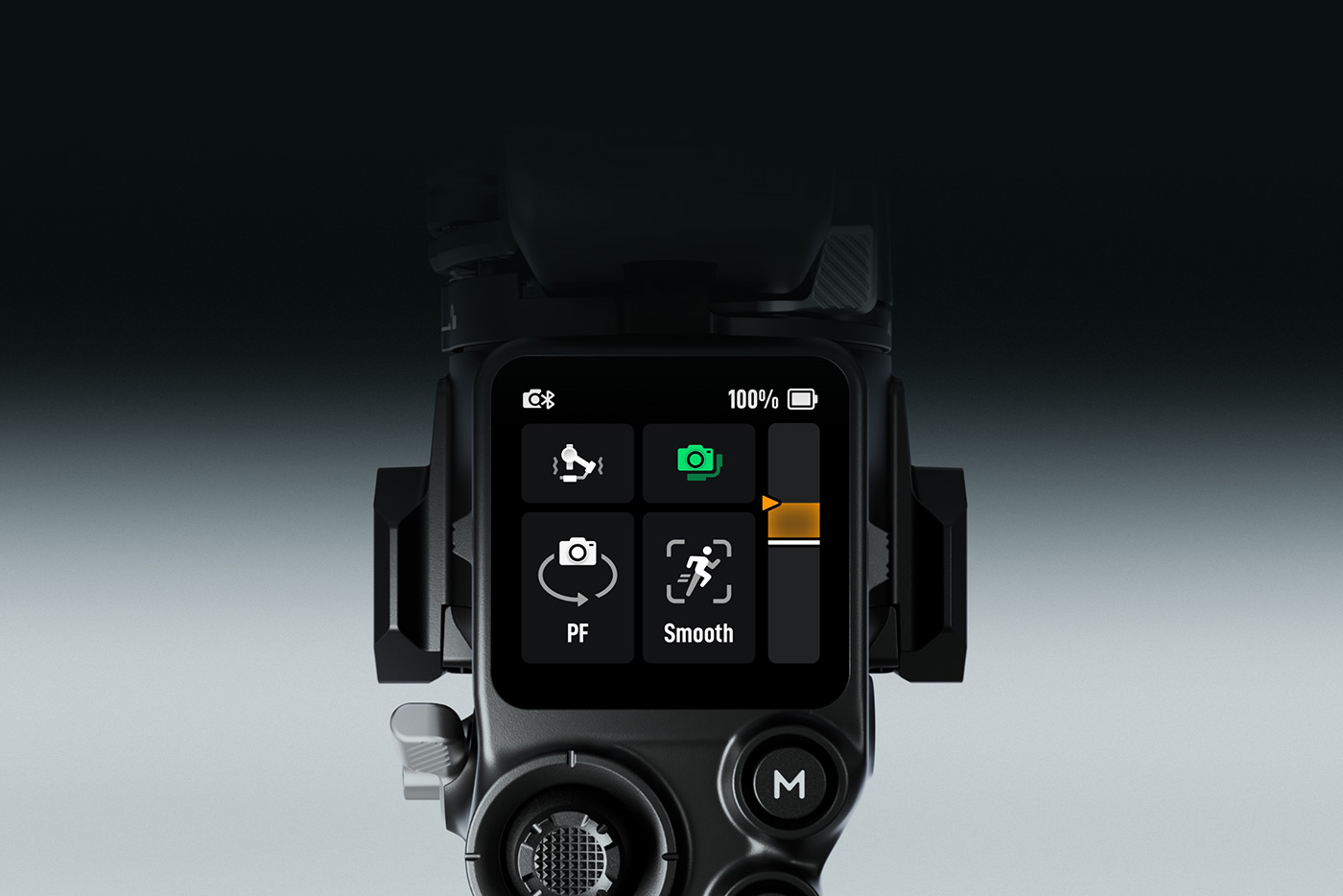
- 1.8-inch OLED touchscreen for settings and subject selection
- Subject selection when used with the Enhanced Intelligent Tracking Module
- Automated axis locks engage on power-off and release on start-up
- Balance knobs with low-friction internal surfaces enable precise adjustment
- Native horizontal and vertical shooting without additional accessories
- Dual-layer quick-release plates for switching between gimbal and tripod setups
- Bluetooth camera control supports cable-free shutter operation on compatible cameras
DJI RS 5 Gimbal Stabiliser in More Detail
Performance and payload
The DJI RS 5 uses a 3-axis motor system driven by the fifth-generation RS stabilisation algorithm for stable results during handheld movement and vertical shooting. Increased motor torque is up by 50% over the previous generation, which helps the gimbal to maintain control with heavier mirrorless camera setups and faster directional changes.
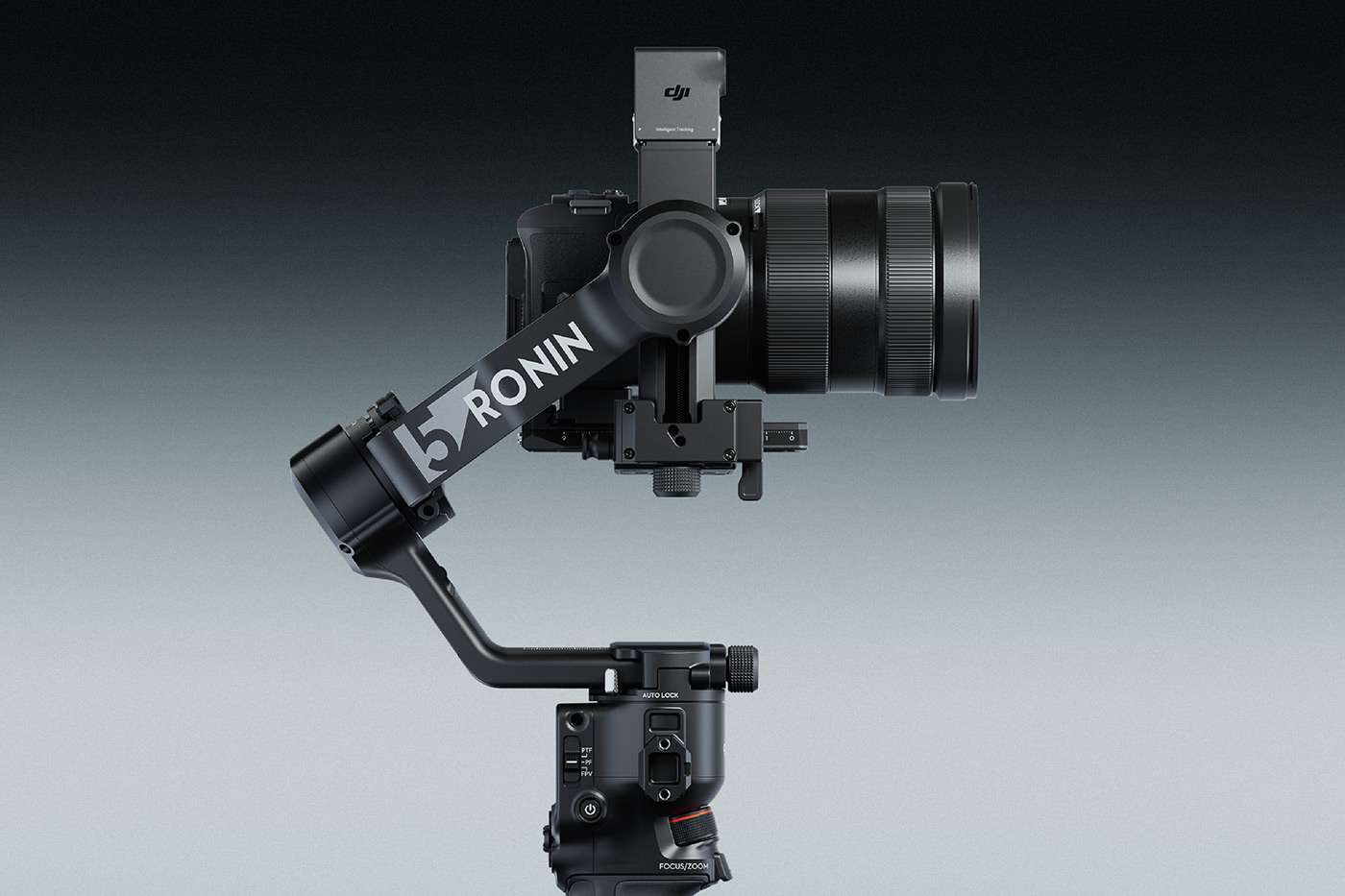
With a tested payload capacity of up to 3 kg, the RS 5 supports common full-frame and APS-C mirrorless cameras paired with standard f/2.8 zoom lenses when correctly balanced.
Despite this capacity, the gimbal weighs just 1.46 kg including the battery grip and quick-release plates, which helps reduce fatigue during extended handheld recording.
Intelligent tracking with touchscreen operation
When using the optional Enhanced Intelligent Tracking Module, the RS 5 allows subjects to be selected and monitored directly from the 1.8-inch OLED touchscreen. This removes the need for an external monitor for basic framing and tracking confirmation.
Tracking support extends to more than a single person to include individual vehicles and pets, with subjects identified on screen and selected via touch input or dial control. In supported situations, the system can reacquire a tracked person if they briefly leave the frame, with a range of up to 10 metres. Tracking behaviour depends on subject movement, framing, and environment, but control remains gimbal-based throughout.
Handling, balance and movement
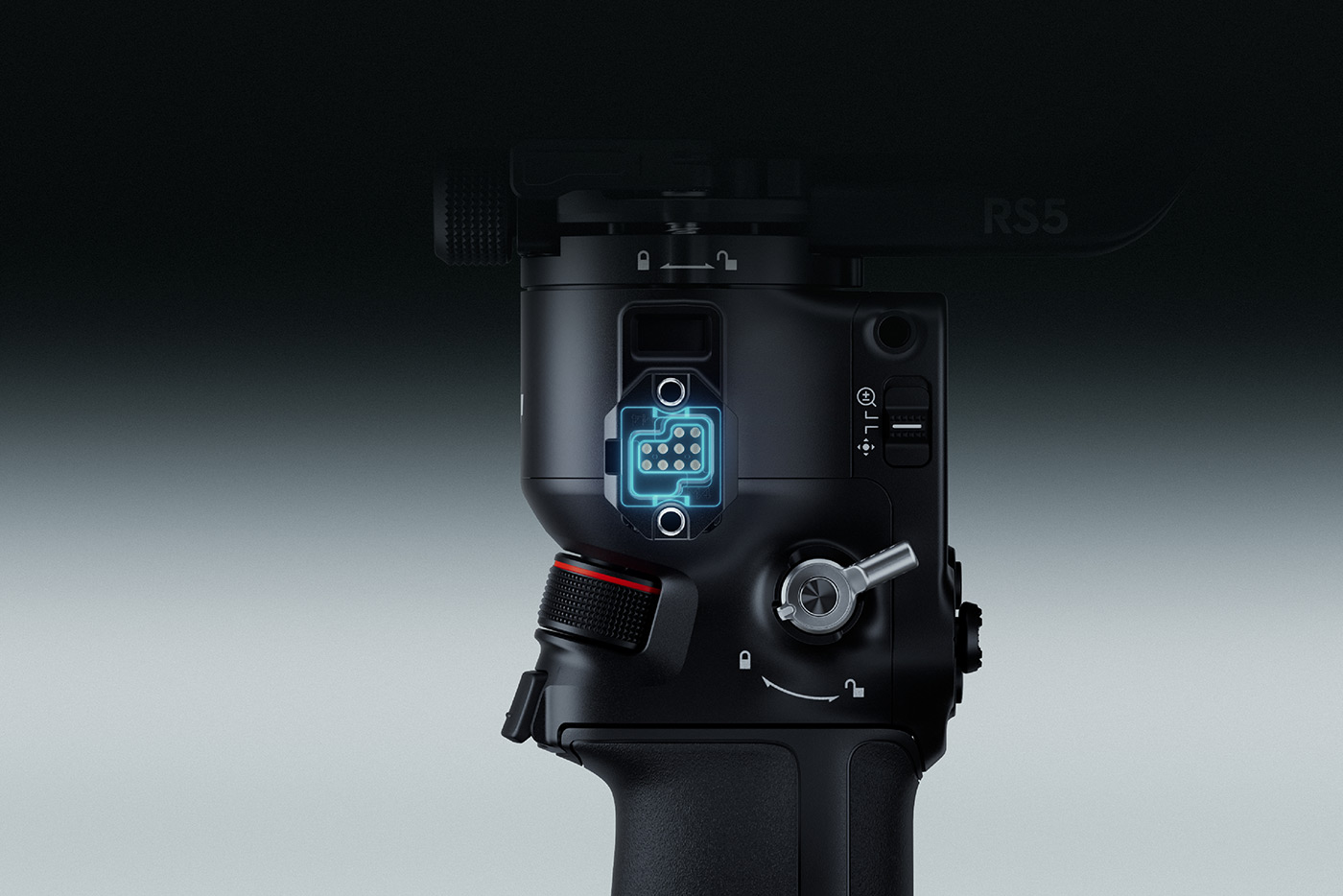
Balancing adjustments are handled through fine-tuning knobs on each axis, using a leadscrew mechanism that allows small, precise changes without shifting the full camera rig. Low-friction internal surfaces help maintain smooth movement during setup, including with heavier configurations.
A built-in Z-axis indicator provides real-time feedback during movement, helping operators adjust their walking motion to reduce vertical bounce. Second-generation automated axis locks engage automatically when the gimbal powers down or enters sleep, then release on start-up, speeding up transitions between shooting and storage.
What camera setups does the DJI RS 5 support?
DJI RS 5 supports a range of common full-frame and APS-C mirrorless camera setups paired with standard f/2.8 zoom lenses, when correctly balanced within the rated payload.
- Sony FX3 and Sony Alpha bodies such as the Sony A7 IV with a 24–70mm f/2.8
- Canon EOS R5 Mark II with RF 24–70mm f/2.8
- Nikon Z6 III or Nikon Z7 II with Z 24–70mm f/2.8
- Panasonic full-frame bodies with a 24–60mm f/2.8
- Fujifilm APS-C bodies such as the X-T5 with a 16–55mm f/2.8
Shooting modes and configuration
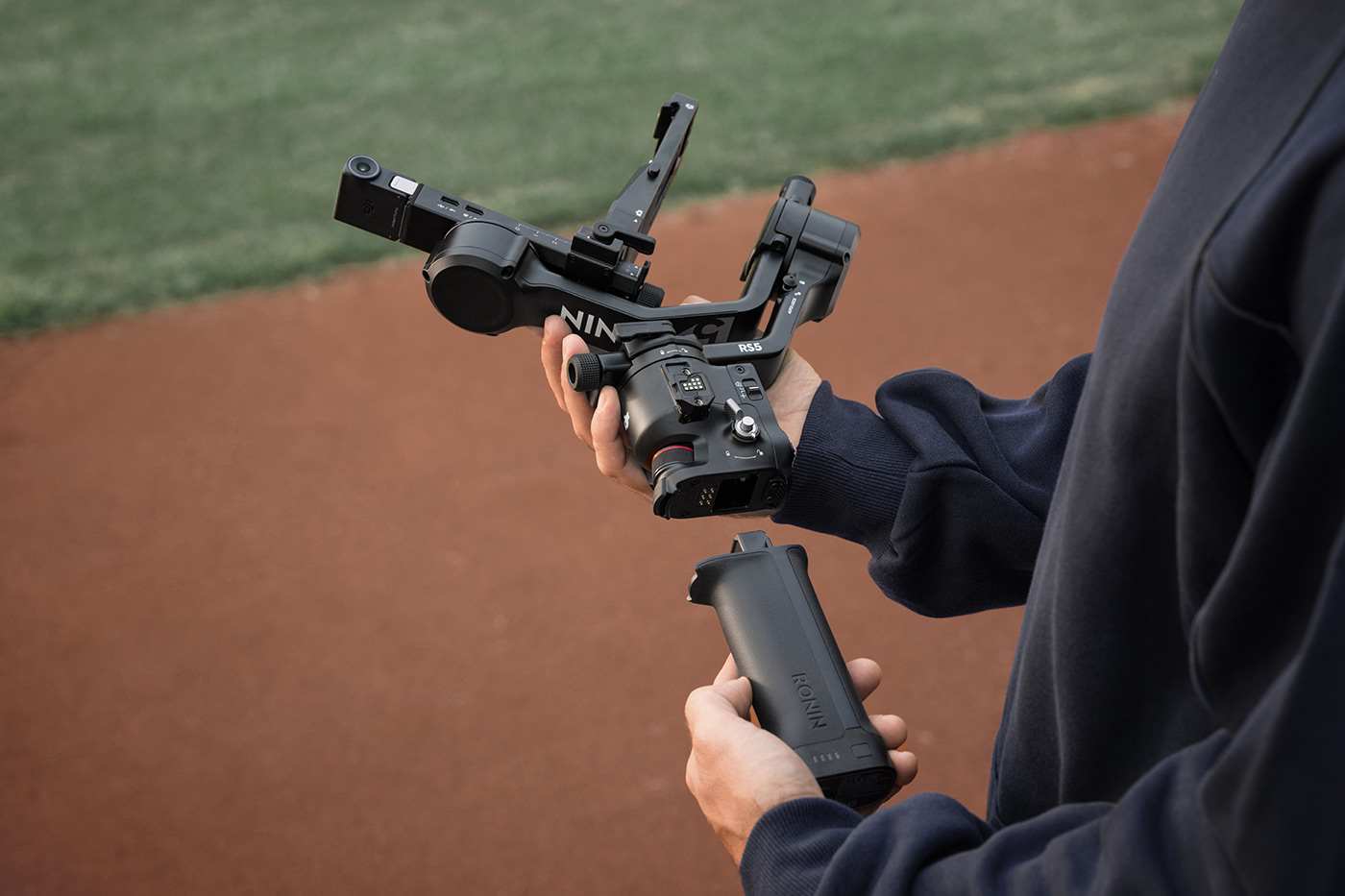
The gimbal supports both horizontal and vertical shooting without needing any accessories. Using third-generation native vertical shooting, the camera mount can be rotated and secured in a vertical orientation within seconds, without requiring rebalancing on the tilt or pan axes.
Dual-layer quick-release plates combine an Arca-Swiss upper plate with a Manfrotto-compatible lower plate, allowing quick switching between gimbal and tripod setups while retaining balance position memory. This reduces setup time when alternating between handheld and static shots.
Power, charging and battery life
The standard battery grip supports fast charging and extended standby time when used with compatible USB-C PD chargers. Under supported conditions, a full charge can be completed in approximately one hour, reducing downtime between shoots. Higher-capacity battery grips extend standby time further, which is useful for longer production days or travel where charging opportunities are limited.
Camera control and accessories
Bluetooth camera control supports cable-free shutter operation on compatible cameras from Sony, Canon, Nikon, Panasonic, and Fujifilm, with functionality depending on camera model and firmware. The RSA communication port enables connection to accessories such as briefcase handles, remote control grips, focus motors, and video transmission systems.
Support for DJI focus motors allows lens focus or zoom to be controlled directly from the gimbal interface, while compatibility with DJI SDR Transmission enables live monitoring and remote operation in supported setups. The open RS SDK also allows third-party accessories and custom control solutions to integrate with the system.
Read our DJI RS 5 comparison, which compares vs the previous model, adds more FAQs and has a comprehensive look at all of the refinements.
Frequently asked questions
How many subjects can the DJI RS 5 track at once?
The DJI RS 5 can track one subject at a time when using intelligent tracking.
What types of subjects can be tracked?
When used with the Enhanced Intelligent Tracking Module, tracking supports a single person, vehicle, or pet, depending on scene conditions and subject movement.
What is the difference between the new Enhanced Intelligent Tracking Module and Intelligent Tracking Module?
The Enhanced module displays the tracking view directly on the touchscreen and supports additional subject types. The standard module only supports human tracking and does not show the tracking view on the screen.
Can the Intelligent Tracking Module be upgraded to the Enhanced version using firmware?
No. The Intelligent Tracking Module cannot be upgraded via firmware.
How long does the battery last and how long does it take to charge?
Standby time is approximately 14 hours with the standard battery grip. A full charge takes around one hour when using a compatible USB-C PD charger.
Can the gimbal be used while charging?
Yes. Operation is supported while connected to a power source.
Is it waterproof or dustproof?
No. It is not sealed against water or dust and should be kept away from moisture and debris.
What material is it made from?
The main structure is made from aluminium alloy.
Are older DJI RS accessories compatible with this model?
Yes. Many previous DJI RS accessories including grips, battery grips, tripods, and control handles, remain compatible.
RS 5 Lifestyle images
What’s in the box
- 1x DJI RS 5 Gimbal
- 1x Quick-Open Tripod
- 1x DJI Logo Sticker
- 1x Lens-Fastening Support
- 1x Screw Kit
- 1x RS 5 Upper Quick-Release Plate
- 1x RS 5 Lower Quick-Release Plate
- 1x BG33 Battery Grip
- 1x Multi-Camera Control Cable (USB-C, 30 cm)
DJI RS 5 Gimbal Specifications
|
Gimbal type |
3-axis handheld motorised stabiliser |
|
Payload capacity |
Up to 3 kg |
|
Gimbal weight |
1.46 kg including battery grip and QR plates |
|
Stabilisation algorithm |
Fifth-generation RS stabilisation algorithm |
|
Axis locks |
Second-generation automated axis locks |
|
Touchscreen |
1.8-inch OLED full-colour touchscreen |
|
Tracking support |
Requires DJI RS Enhanced Intelligent Tracking Module (optional) |
|
Supported tracking subjects |
Single person, vehicle, or pet (conditions apply) |
|
Vertical shooting |
Third-generation native vertical shooting |
|
Quick-release system |
Dual-layer Arca-Swiss upper and Manfrotto lower plates |
|
Balance adjustment |
Fine-tuning knobs on all axes |
|
Movement feedback |
Integrated Z-axis indicator |
|
Camera control |
Bluetooth shutter control and control cable support |
|
Focus control |
Supports DJI Focus Pro motors (optional) |
|
Video transmission |
Supports DJI SDR Transmission (optional) |
|
Expansion ports |
RSA port, NATO ports, USB-C control ports |
|
Battery type |
Detachable battery grip |
|
Charging time |
Approx. 1 hour with compatible USB-C PD charger |
|
Standby time |
Approx. 14 hours with standard battery grip |
|
Extended standby time |
Up to 30 hours with high-capacity battery grip (optional) |
|
Operating temperature |
-20°C to 45°C |
|
Body material |
Aluminium alloy |
Specifications
|
Gimbal type |
3-axis handheld motorised stabiliser |
|
Payload capacity |
Up to 3 kg |
|
Gimbal weight |
1.46 kg including battery grip and QR plates |
|
Stabilisation algorithm |
Fifth-generation RS stabilisation algorithm |
|
Axis locks |
Second-generation automated axis locks |
|
Touchscreen |
1.8-inch OLED full-colour touchscreen |
|
Tracking support |
Requires DJI RS Enhanced Intelligent Tracking Module (optional) |
|
Supported tracking subjects |
Single person, vehicle, or pet (conditions apply) |
|
Vertical shooting |
Third-generation native vertical shooting |
|
Quick-release system |
Dual-layer Arca-Swiss upper and Manfrotto lower plates |
|
Balance adjustment |
Fine-tuning knobs on all axes |
|
Movement feedback |
Integrated Z-axis indicator |
|
Camera control |
Bluetooth shutter control and control cable support |
|
Focus control |
Supports DJI Focus Pro motors (optional) |
|
Video transmission |
Supports DJI SDR Transmission (optional) |
|
Expansion ports |
RSA port, NATO ports, USB-C control ports |
|
Battery type |
Detachable battery grip |
|
Charging time |
Approx. 1 hour with compatible USB-C PD charger |
|
Standby time |
Approx. 14 hours with standard battery grip |
|
Extended standby time |
Up to 30 hours with high-capacity battery grip (optional) |
|
Operating temperature |
-20°C to 45°C |
|
Body material |
Aluminium alloy |